

The UK Health Security Agency (UKHSA) is continuing to investigate an outbreak of meningococcal disease in Kent with 13 cases notified since Friday 13th March 2026.
The outbreak has primarily affected teenagers and university students linked to close-contact social settings. Officials have identified the strain as Meningitis B.
Meningitis spreads through close or prolonged contact such as:
- Coughing
- Sneezing
- Kissing
- Sharing items like drinks or vapes
What actions are being taken?
UKHSA specialists are continuing to interview affected individuals and their families to identify close contacts and arrange antibiotics to limit further spread.
Close contacts of cases have already been given antibiotics as a precautionary measure, and advice and support is being offered to the wider university community, local hospitals and NHS 111.
If you have been in close contact with a confirmed or probable case of Meningitis and you do not have any symptoms and have NOT been contacted by the UKHSA, then please contact the health centre so that we can inform the relevant parties.
While meningitis is a serious condition, cases remain rare. The risk to the wider public is considered low and public health teams are working to control the situation.
What is Meningitis?
Meningitis is an infection that affects the membranes covering the brain and spinal cord, known as the meninges.
While it can occur at any age, it is most frequently seen in infants, young children, teenagers, and young adults.
If not treated promptly, meningitis can become extremely serious.
In severe cases, it may lead to life-threatening sepsis or cause lasting damage to the brain and nervous system.
There are several vaccines available that can help provide protection against certain types of meningitis.
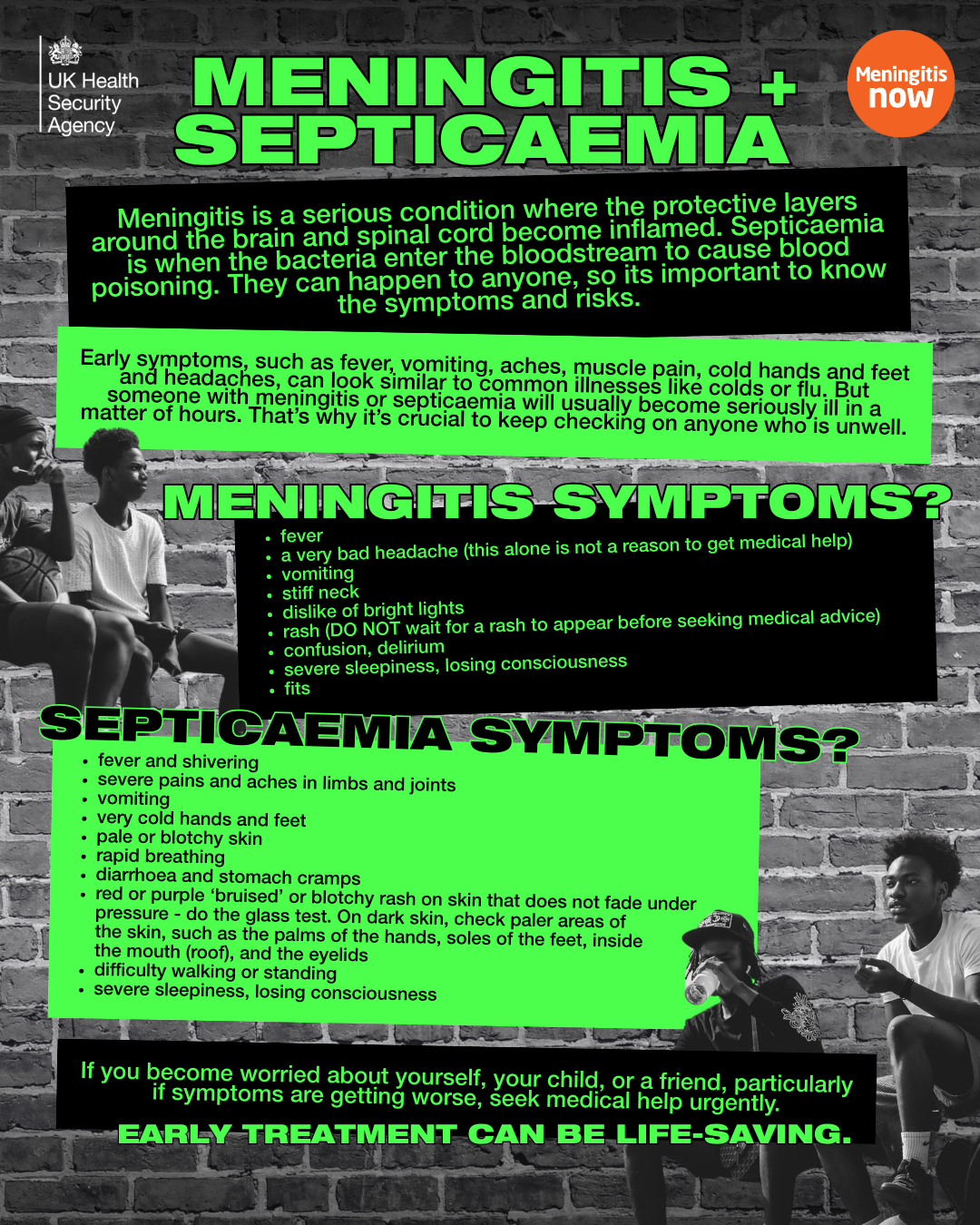
What are the symptoms?
Signs of meningitis can appear quickly and may include:
- a high fever
- nausea or vomiting
- headache
- a rash that does not fade when pressed (although a rash is not always present)
- neck stiffness
- sensitivity to light
- feeling unusually sleepy or difficult to wake
- seizures (fits)
These symptoms do not always occur together and can develop in any sequence.
What should I do if I feel unwell?
If you or someone you know develops symptoms of meningitis or septicaemia, seek medical support urgently by attending the nearest Accident & Emergency (A&E) department or call 999. You may also contact NHS 111 if you need advice about your symptoms.
Does the MenACWY offer protection?
The MenACWY vaccine offers protection against several strains of meningococcal disease and is routinely offered to teenagers in school years 9 and 10. However, it does not protect against all strains. Other strains, such as MenB, can circulate among young adults, so it is important to know the signs and symptoms, regardless of vaccination status.
Who is eligible for the Meningitis vaccine?
Vaccination is the most effective way to prevent certain types of meningitis, but eligibility varies depending on age and vaccine type:
MenB (Meningitis B) Vaccine
- Routinely offered on the NHS to babies (introduced in 2015)
Typically given at:
- 8 weeks
- 12 weeks
- 1 year
The vaccine is not routinely offered to teenagers or adults.
Current national guidance advises that no additional vaccines are needed for those outside of the eligibility criteria.
NHS Website
For further details about Meningitis, please visit the NHS website: https://www.nhs.uk/conditions/meningitis/
Page Created: 17th March 2026
Page Updated: 18th March 2026